Anatomy 4D
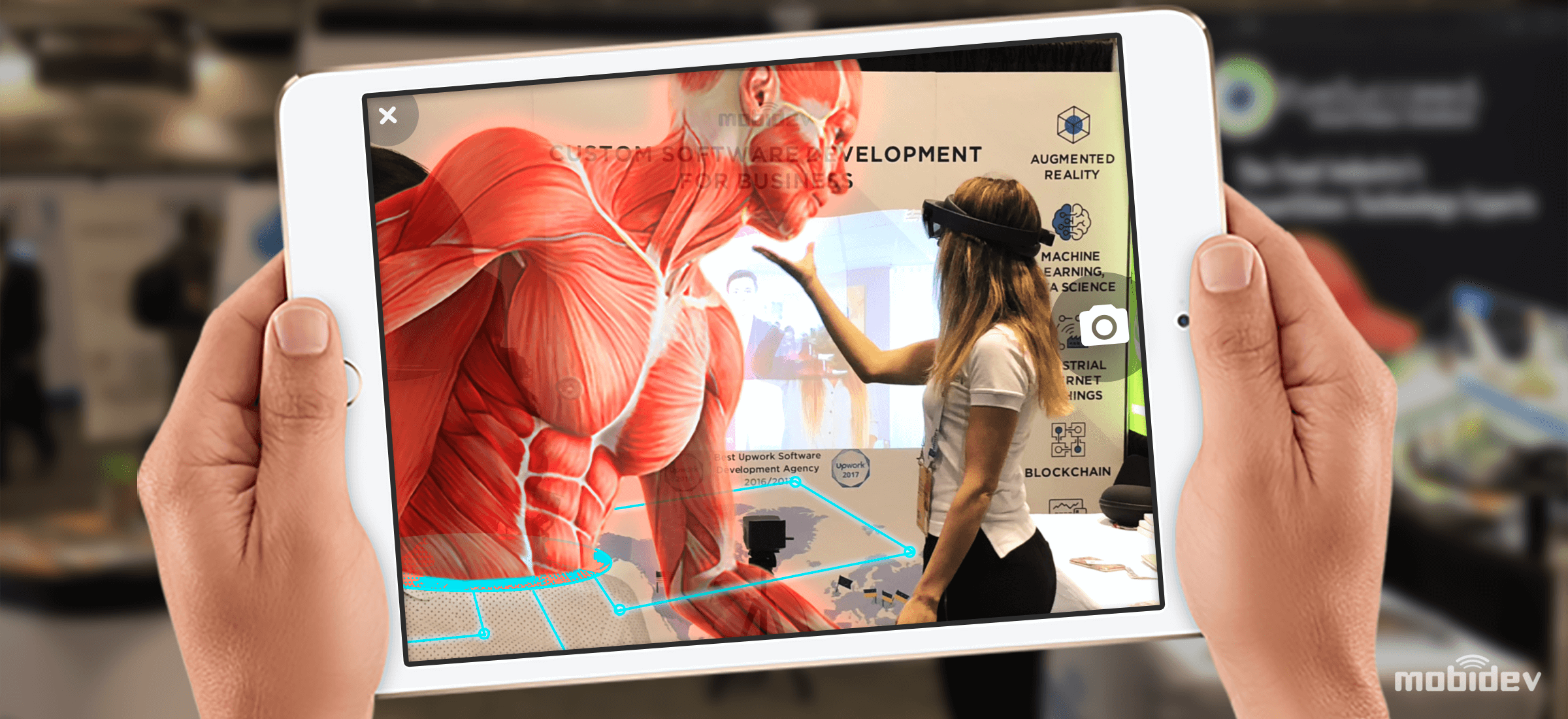
Augmented reality (AR) creates an experience which involves both the real and digital world. This occurs with the overlay of technology, displaying temporary modifications without actually making any changes. This coexistence of virtual objects in our regualar environment, offers endless engaging learning opportunities (Azuma, 1997). To further explore AR, I investigated various apps, specifically ‘Anatomy 4D’.
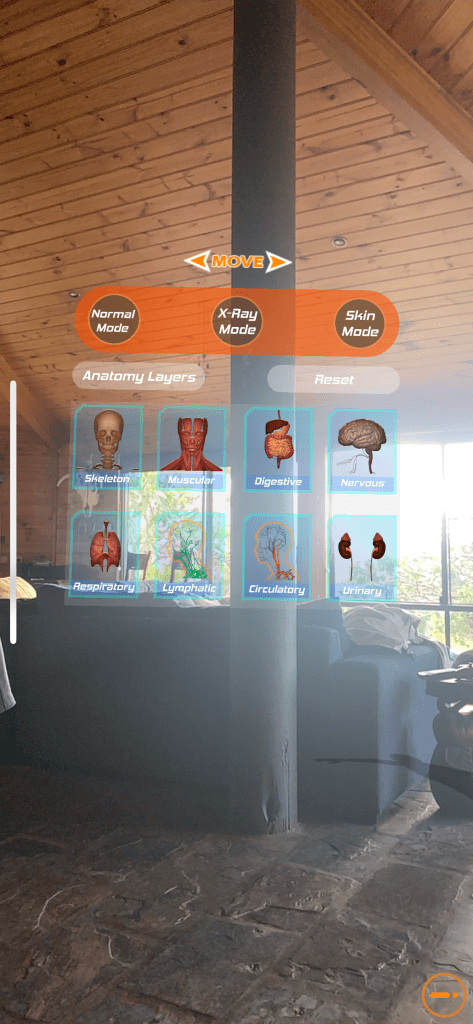
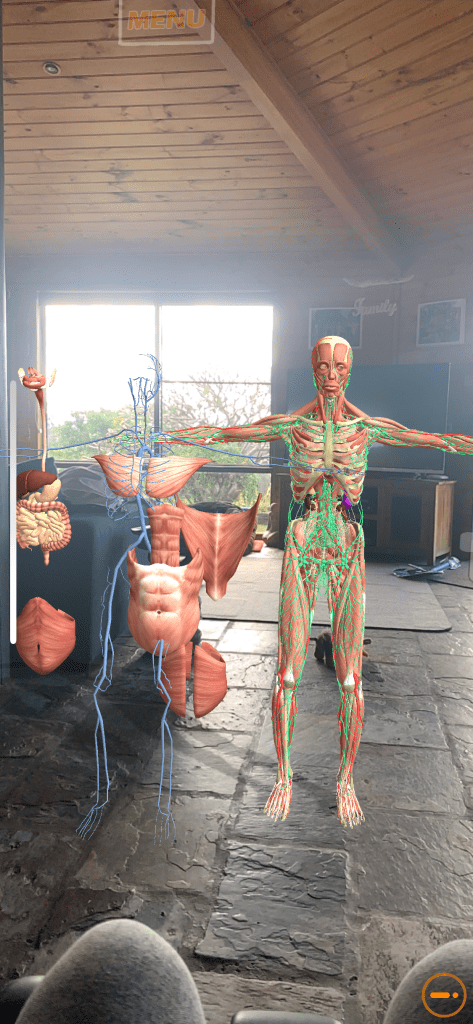
What is it? Anatomy 4D is a free app which uses AR to allow students to interact and visually learn more about the human body. Through a camera display, a the human body in projected in front of the user, which can be rotated, resized, etc. The following apps were also explored this week, which most of which follow a similar approach:
- SkyView
- Zapper
- Space Race
- Quiver Education
- Word Lens
- Qlone
- Spacecraft 3D
- Virtual Tee
Advantages and Disadvantages As mentioned, the Anatomy app is free to download and use, making it easily accessible for everyone. It provides a great visual experience for students to gain a deeper understanding of the human body and allows users to examine different anatomy layers at a time, such as specifically looking at the nervous system, or muscular etc. However, through my experience with the app, I encountered some glitches and technical issues, such as its tendency to shut down and exit, which would prove problematic in a classroom setting if it occurred frequently. Although taking this into consideration, I still viewed it as a great stand-alone resource, best suited for stage three students and potentially in need of a software update.
Classroom Implications This app would provide engaging learning experiences in PDHPE and biology lessons. However, AR can be implemented in all key learning areas as there is a wide variety of tools and programs avaliable, which cover most educational topics, some examples are in the list above. The use of AR in the classroom can also effectively support the following pedagogies: games-based learning, inquiry-based learning, situated learning, constructivist, connectivist, behaviourist and authentic and contextualised learning (Bower, 2014). This app specifically links to constructivist theory, as it allows users to engage with the content they are studying on a deeper level and also encourages effective group work experiences, where students can gain knowledge from one another.
References:
Azuma, R. (1997). A survey of augmented reality. Presence. 6(4), 355-385.
Bower, M., Howe, C., McCredie, N., Robinson, A. & Grover, D. (2014). Augmented reality in education – cases, places and potentials. Educational Media International, 51:1, 1-15.
 EDUC3620 Digital Creativity and Learning