CoSpaces
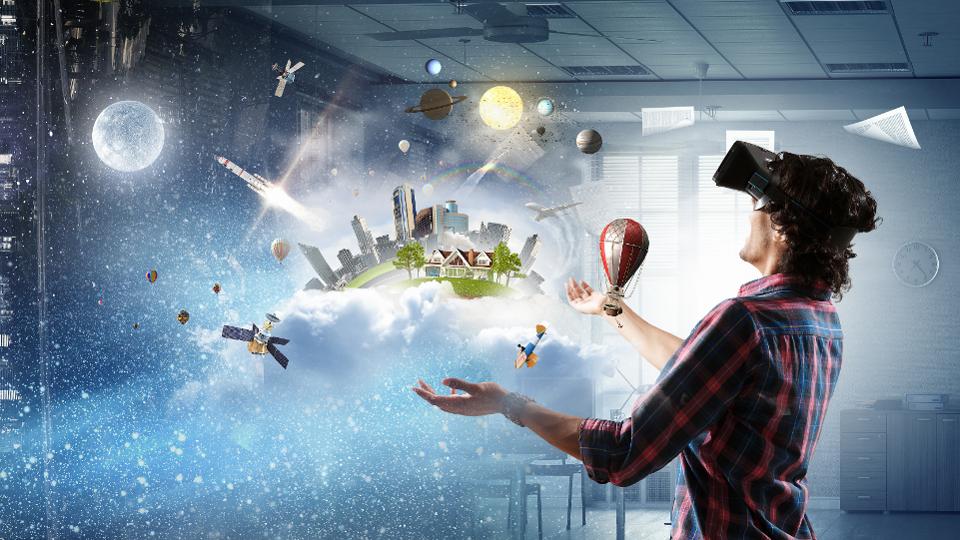
Virtual reality is a technology that displays a virtual environment in a computer produced setting, in which users can interact through an interface that reflects with the users real time actions and movements (Tussyadiah et al., 2018). Through this experience users are able to gain a sense of pysically being in the virtual environment (Southgate et al., 2019). There are three main types of virtual reality (VR), fully-immersive, semi-immersive and non-immersive, which range from using external devices, such as a head-set, to just playing a video game (Poetker, 2019).

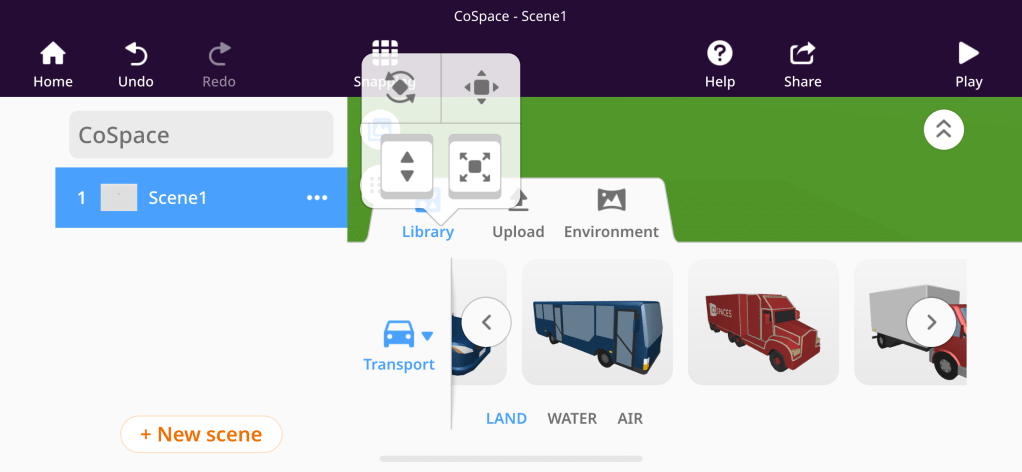
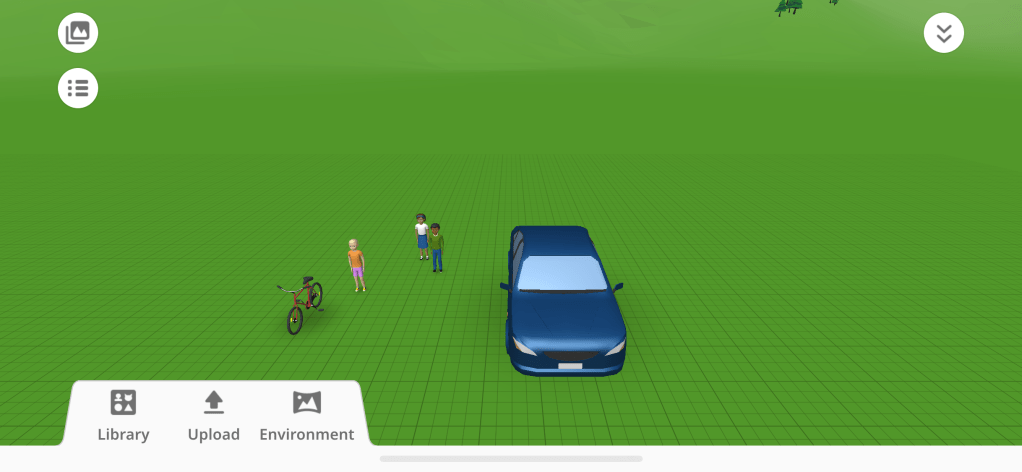
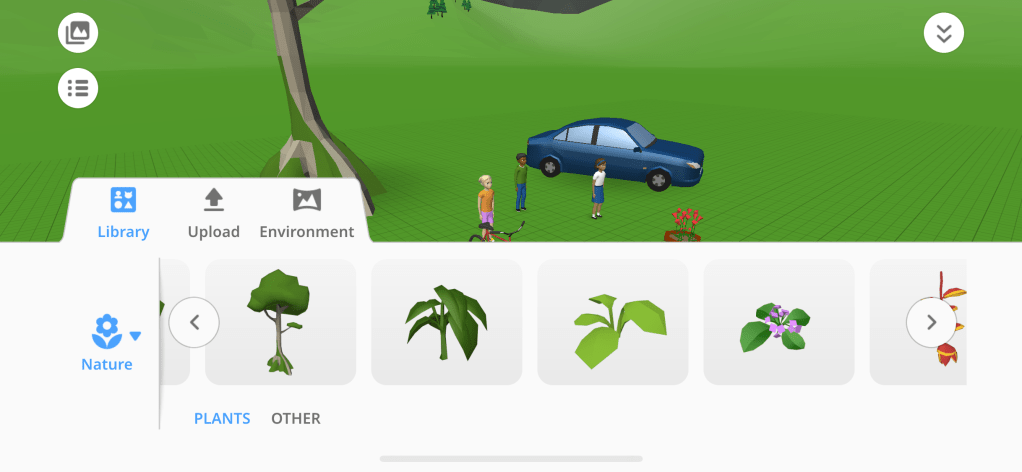
What is it? CoSpaces is a free interactive app/website, which can operate as both fully immersive and non immersive. The program allows for users to create their own VR creations, through simple coding and 3D animations. In comparision to other VR programs such as minecraft or google street veiw, CoSpaces seems more beniefical for use in the education setting, as it was moreso designed for this purpose and has a wide variety of tools and recources for students to create meaningful content.
Advantages and Disadvantages This program is a great resource to use in the classroom as it allows teachers to create VR environments, which students can observe or add to through the use of inputting a code, or student can be encouraged to create their own content. An advantage of CoSpaces is that is can be explored in a variety of different subjects, and the program also provides a simple and fun introduction to coding. This is done in a very straight forward and easy to navigate manner, there are also many resources and tutorials avaliable for further instruction. There are very few limitations that this program has, however, one could be that in order to use CoSpaces to its highest potential, the use of external devices may be required, such as headsets, which would prove to be a costly experience.
Classroom Implications As mentioned above, CoSpaces is very versatile and can be implemented into many different subject areas, for a variety of different reasons, for instance, creating projects, exploring subject content, etc. It could be utilised in just about all subject areas, from English, in bringing storyboards or creative writing to the virtual world, or Science, through creating a virtual display of the solar system. Overall, the possibilities are endless, all of which provide the opportunity for students to engage in autonomous learning at their own pace, or constructive learning through group work, where students can provide guidence for one another, rather than instruction from the teacher (Bower & Sturman, 2015).
References:
Bower, M. & Sturman, D. (2015). What are the educational affordances of wearable technologies?. Computers and Education, 88, 343-353.
Poetker, B. (2019). What Is Virtual Reality? (+3 Types of VR Experiences). Retrieved 3 May 2020, from https://learn.g2.com/virtual-reality
Tussyadiah, I.P., Wang, D., Jung, T.H. & Dieck, M. C. (2018). Virtual reality, presence, and attitude change: Empirical evidence from Tourism. Tourism Management, 66, 140-154
Southgate, E., Smith, S. P., Cividino, C., Saxby, S., Kilham, J., Eather, G., … & Bergin, C. (2019). Embedding immersive virtual reality in classrooms: Ethical, organisational and educational lessons in bridging research and practice. International journal of child-computer interaction, 19, 19-29.
 EDUC3620 Digital Creativity and Learning
