TinkerCad
Design based thinking is a user focused approach, which involves the mental process of problem solving how to achieve a desired design (Dunne & Martin 2003). It is a interactive and structured approach that is suggested to be achieved by the following steps: identify challenges, gather information, create potential solutions, refine ideas and test solutions (Design Thinking in Education, 2020). Design thinking important to integrate into the classroom as it allows students to take control of their own learning. With the vast variety of emerging technologies present in the classroom, teachers are increasingly able to provide opportunities which foster this approach. One technology that encourages students to develop these skills and create meaningful solutions is TinkerCad.
What is it? TinkerCad is a program that allows students to freely make designs which can then be transferred to tangible three-dimensional objects, through the use of a 3D printer. The program has few limitations as it offers numerous options for creating, from build your own design, to pre-made templates and a combination of the two.
Advantages and Disadvantages. TinkerCad is a great program for allowing students to create many designs, transferring them from a mental thought to a 3D creation. However, TinkerCad is limited in the sense that it is complex and confusing for first time users and due to this it may be more so beneficial for high school students, rather than primary. I personally tried the program and found that after familiarising myself with the layout and watching some tutorials, its was easier to navigate and create a design. Overall this program is a great resource as it encourages creative and is flexible in the sense that it can be used across multiple KLAs.
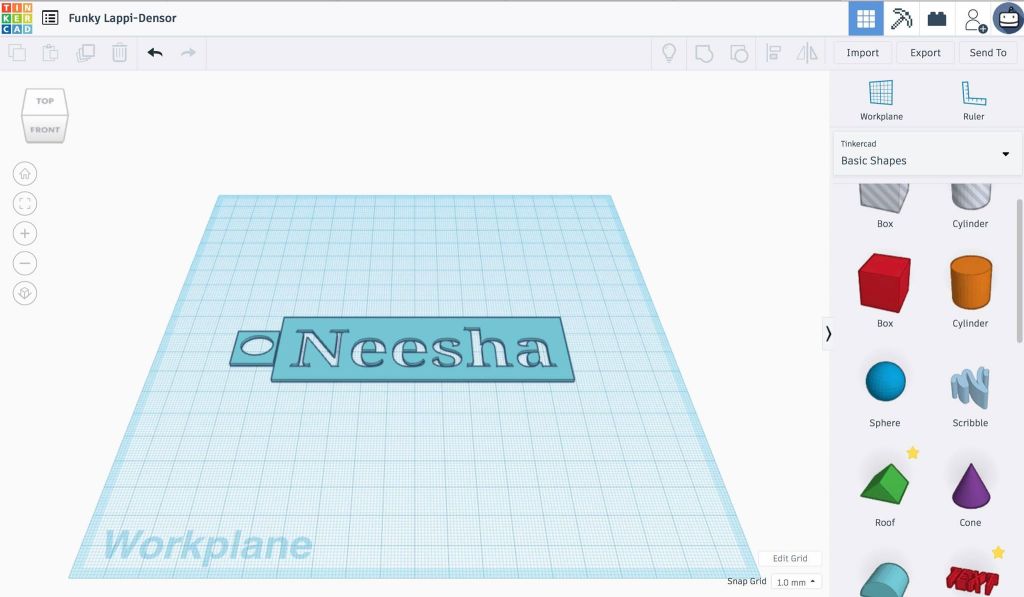
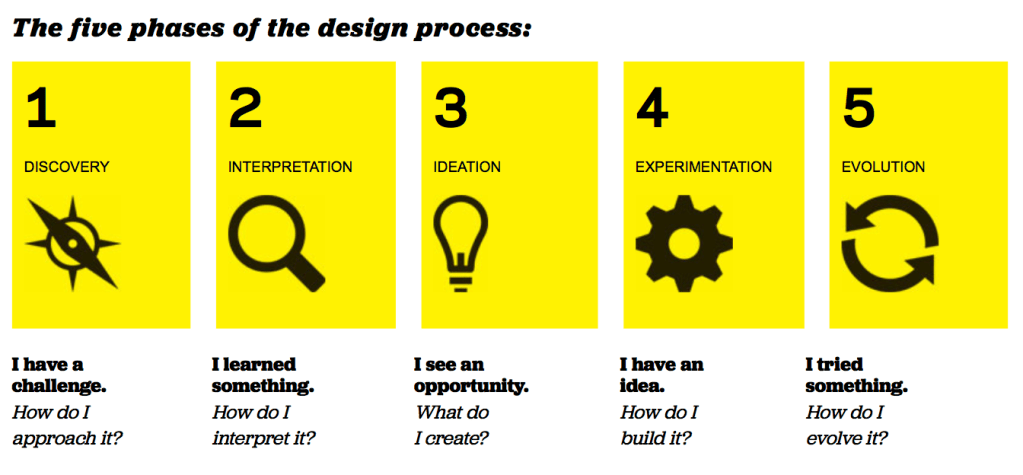
TinkerCad and Design Based Thinking. Through the flexibility of TinkerCad, students are able to successfully analyse problems and uncover appropriate solutions. The program assists students to transfer their mental ideas into a template, then finally into a 3D creation. This is achieved by students working through the 5 phases of design: discovery, interpretation, ideation, experimentation and evolution (Design Thinking in Education, 2020).
Classroom Implications. TinkerCad isn’t limited and can be used across various KLA areas. It can be used in various ways to foster design thinking, through the 5 phases of design and also creatives. There are endless opportunities to implement this process, through TinkerCad in the classroom, some include: history – creating models of historical architectures, maths – exploring 3D shapes and many more.
References:
Design Thinking in Education. (2020). Retrieved April 3rd 2020, from https://tll.gse.harvard.edu/design-thinking
Dunne, D. & Martin, R. (2006). Design thinking and how it will change management education: An interview and discussion. Academy of Management Learning & Education, 5(4)
 EDUC3620 Digital Creativity and Learning

Hi Neesha, thanks for sharing your thoughts about design-based learning. I really like how you structured your blog. I can clearly get a basic understanding of what DBL theory is and what role does DBL take in education.
When introducing the implementation of DBL in the classroom, you give us an example of technology —— ThinkerCad. Which I found really interesting and I agree with your thought that it allows students a new way of learning. Also, you state the limitations of using ThinkerCad in the class, where students may confuse when the first time using it. This is due to students’ inadequate capability of the technology (Bower, 2017), so the teacher needs to assist while student utilising the program.
Then you provide the idea of integrating ThinkerCad to the DBL class, and with the picture of five phases of design thinking, where illustrates the detailed DBL learning process.
At last, you suggest the general ideas of adopting ThinkerCad in a DBL class.
Overall, a great post 😊. Thanks!
LikeLike